"The scale of the challenge demands more than good intentions."
Published 09 January 2026
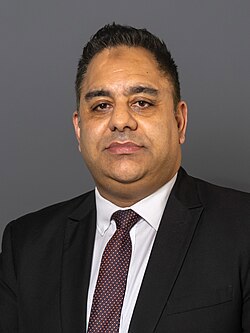
In September Imran Hussain MP attended the United Nations High-Level Conference on the Rohingya Muslims and Other Minorities in Myanmar, with the help of CPA UK. In this article he reflects on the conference and discusses how we can better support Rohingya Muslims in Myanmar.
By Imran Hussain MP
One of the very first issues I raised when I entered Parliament nearly 11 years ago was the plight of the Rohingya. A resilient, courageous people who have endured unspeakable suffering, the Rohingya have lived for decades under persecution, statelessness, and displacement. At that time, I pressed the Government to take stronger action to prevent further atrocities. By 2017, reports began emerging from my own constituents about the Myanmar military’s campaign of genocide. I continued to urge Ministers to act decisively, but those calls went unanswered. Unfortunately, beyond some limited aid commitments, little changed. It is deeply disheartening that in 2025, we are still at square one.
The scale of the injustice cannot be overstated. Over a million Rohingya refugees now reside in Bangladesh, largely in the Cox’s Bazar camps, having fled the genocidal ethnic cleansing in Myanmar’s Rakhine State. Millions more live outside the camps across Bangladesh and the wider region, surviving with little protection or access to basic rights. Many more remain trapped inside Myanmar, caught between systemic oppression and a brutal civil war. Combined with collapsing global aid contributions and an increasingly distracted international community, the conditions facing the Rohingya are worsening.
That is why, with the support of the Commonwealth Parliamentary Association UK Branch (CPA UK), I attended the United Nations High-Level Conference on the Rohingya Muslims and Other Minorities in Myanmar. The conference was a crucial opportunity to engage with humanitarian experts, diplomats, and government representatives. It was also a stark reminder of how much more needs to be done.
Attending the Conference enabled me to meet representatives from the UK Mission to the UN, humanitarian agencies, and Rohingya advocacy groups to raise the concerns of my constituents and the wider diaspora community. These meetings were a chance to push for clarity on the UK’s funding commitments and to highlight the humanitarian risks caused by recent aid reductions - especially the major risk to educational and health services in Cox’s Bazar. It allowed me to represent not just my constituency, which is home to the UK’s largest Rohingya population, but also to speak up for a community that has been consistently failed by the international system.
To be clear, the UK has made important contributions, with over £420 million in aid committed since 2017. As the UN Security Council’s penholder on Myanmar, Britain has played a central role in keeping international attention on this issue. The UK has also supported practical initiatives in Bangladesh, such as pilots for mobile money access and SIM cards, aimed at improving self-sufficiency in the camps.
But the scale of the challenge demands more than good intentions.
The political and humanitarian context is deteriorating. Myanmar is in the throes of a civil war. The Tatmadaw continues to commit atrocities. The Arakan Army has forcibly conscripted Rohingya youth, fuelling ethnic division. And in Bangladesh, funding cuts have already forced some UN health programmes to shut. Hunger and malnutrition are on the rise. Education and healthcare are being scaled back. Any talk of “voluntary return” is unrealistic.
At the conference, officials from Bangladesh, UN agencies, and civil society made impassioned statements. But behind the diplomatic language, the same truth emerged: without urgent and concrete action, the situation will only deteriorate further.
It became clear that while the UK and US have historically played a constructive role, further reductions in aid risk exacerbating a critical humanitarian crisis. I was particularly struck by the consensus that political solutions must be matched by tangible investment in education, primary healthcare, and livelihood programmes. The conference underscored the urgent need for coordinated international action driven not just by governments but by parliamentarians, diaspora communities, and frontline organisations.
So what should we do?
First, we must move beyond repatriation-only frameworks. Safe, dignified return is not possible under current conditions. Instead, interim solutions must focus on ensuring rights, dignity, and opportunity for Rohingya communities where they are now. That means immediate investment in education, healthcare, and skills training in the camps.
Second, humanitarian aid must be sustained and expanded. The 2025 Joint Response Plan is only 38% funded. That amounts to just $355 million of the $934.5 million appeal — a sharp drop from previous years that threatens to push the response to breaking point. Cuts from traditional donors, including the UK and the US, threaten to undo years of progress. We need a multi-year funding pledge to stabilise the crisis, protect children, and prevent the emergence of a lost generation.
Third, there must be a coordinated political plan for Myanmar’s recovery. Constitutional reform, restoration of citizenship for the Rohingya, and accountability for past and ongoing abuses must all be part of a long-term strategy. Civil society organisations are calling for the creation of an international contact group to push this forward. The UK should lead that effort.
Fourth, we must ensure Rohingya voices are central to any solution. It was deeply concerning that few Rohingya representatives were present at the UN conference. How can we build a political roadmap without the people most affected?
Bradford is home to the UK’s largest Rohingya diaspora. Their voice and experience must inform our actions. As a Member of Parliament, I will continue raising this issue and pushing for action which centres on dignity and justice.
Attending the conference also reinforced the importance of direct engagement. As an MP, it gave me the chance to communicate the depth of feeling across the UK -particularly from those who have family directly affected by the crisis. These conversations, grounded in lived experience and parliamentary advocacy, are vital to shaping a more accountable and compassionate response.
In the words of UN High Commissioner for Human Rights Volker Türk at the conference: “The international community must honour its responsibilities and act. We stand in solidarity with the Rohingya and all the people of Myanmar, in their hour of greatest need.”
Solidarity must now become substance.