Parliamentarians discuss disability rights at the BIMR CPwD Forum in Scotland
Published 22 April 2026
Forum Background
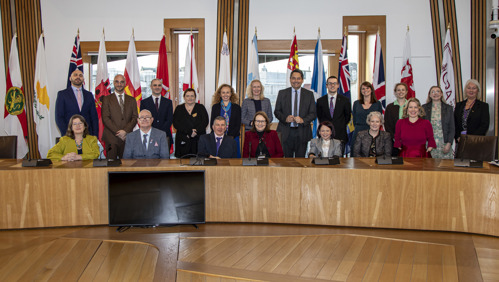
Scottish Parliament recently hosted the first BIMR Disability Forum for the Commonwealth Parliamentarians with Disabilities (CPwD) Network, which was attended by parliamentarians from across the region. This took place on Friday 20 February and was a one-day event involving a regional CPwD Steering Group meeting and two panel sessions in the afternoon. Delegates were also able to attend the public Disability Summit hosted by Scottish Parliament on Saturday 21 February.
The Forum began with the first hybrid meeting of the regional CPwD Steering Group meeting which included representation from the CPA Secretariat to outline the international CPwD strategy for 2026. This group is comprised of regional parliamentarians and functions as the support network for the Regional Champion on Disability.
Session 1: Accessibility Audits
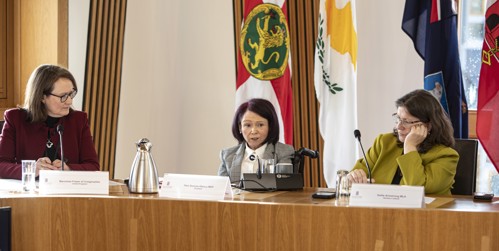
The first session of the afternoon focused on the design and implementation of accessibility audits and featured contributions from CPA Secretary-General Stephen Twigg; Alan Durward, Head of Facilities at Scottish Parliament; and Brian Taggart, contractor of Scottish Parliament’s recent accessibility audit.
Stephen Twigg opened the session by congratulating the region on its progress and outlining the key pieces of work for the Secretariat in 2026. These included the development of a model law toolkit and the creation of a self-assessment accessibility framework for parliaments. He emphasised the importance of disability rights to the CPA mission and pointed to SDG 16.7: To ensure responsive, inclusive, participatory, and representative decision-making at all levels.
Alan Durward spoke of the need to consider the importance of customer service and staff training in advancing accessibility in parliament. He noted recent developments in Scottish Parliament including quiet spaces for neurodivergent individuals.
Brian Taggart outlined the findings of the Scottish Parliament accessibility audit. He addressed the need to embed accessibility into design and highlighted the importance of lived experience in this process. He highlighted the value in acknowledging the gaps in good practice to ensure visitors are fully equipped to enter parliamentary spaces.
Delegates discussed the challenges facing accessibility in their respective parliaments, including the lack of dedicated networks and the gap between audit services and implementation. The key takeaway for Members was the focus on parliamentary services and community engagement, in going beyond the bricks and mortar to create accessible parliaments through other means.
Session 2: How can we encourage more people with disabilities to stand as candidates in elections to ensure our Parliaments are representative of our society?
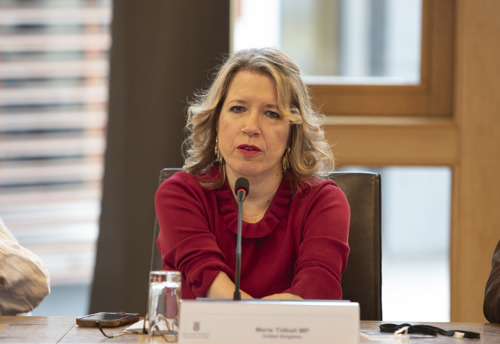
This session explored how to increase disabled representation in parliament through the election process, in encouraging more disabled candidates to stand. Panellists were Pam Duncan-Glancy MSP, Baroness Fraser of Craigmaddie, Marie Tidball MP, and Ellen Blundson of Inclusion Scotland.
Pam Duncan-Glancy championed the need to start small and focus on the pillars of independent living for disabled people. She stressed that change wouldn’t happen by accident and noted that many disabled candidates were elected through party systems due to the support this could provide. She raised the point of positive action through shortlists and underlined the need for visibility to ensure people-friendly parliaments could be achieved.
Baroness Fraser spoke on the accessibility measures in the House of Lords and noted the potential for online participation made possible during the pandemic. She emphasised the diversity of experience in the Lords and the crucial ability to legislate on a multitude of issues.
Marie Tidball’s address focused on three objectives:
- nothing about us without us
- increasing accessibility in parliamentary spaces
- transforming attitudinal changes.
She noted the rising issue of ageing populations and pointed to the value of disabled people as problem solvers and innovators. She outlined UK initiatives on increasing accessibility to elections and reiterated the need to discuss positive action as a means of securing representation across the board.
Ellen Blundson outlined the Elected Office Fund and highlighted the financial barriers facing disabled candidates. She recognised the importance of cultural change alongside the fund but noted that this removed an immediate barrier and represented a commitment to addressing disabled underrepresentation in politics.
Discussion focused on the importance of the social definition of disability and the call to legally define lived experience. Delegates recognised the impact of representation on the normalisation of accessible practices, such as the intervention button mechanism in Scottish Parliament. Work on baseline improvements for the disabled community was a key takeaway for parliamentarians, as well as discussion on the cultural changes that parliaments could lead on.
CPwD Summit
Scottish Parliament’s Disability Summit brought together disabled persons, advocates, and organisations to share their lived experience and discuss advocacy efforts with MSPs. The Summit was opened by Presiding Officer Alison Johnstone and included remarks by Jeremy Balfour MSP, and Kaukab Stewart, the Minister for Equalities.
Breakout sessions looked at education, voting access, transport, social security and social care. Session feedback highlighted the common themes of collective fatigue from lack of change and a lack of organisational cohesion. The cultural resonance of these challenges was recognised by all and was underpinned by the quote “if you’re too busy trying to survive, you can’t thrive.”
Both events provided crucial conversation on the importance of accessible parliaments, engagement at the grassroots level, and the need to ensure a disability-forward approach in society.