CPA UK visit to the parliament of Namibia
Published 20 April 2026
About the visit
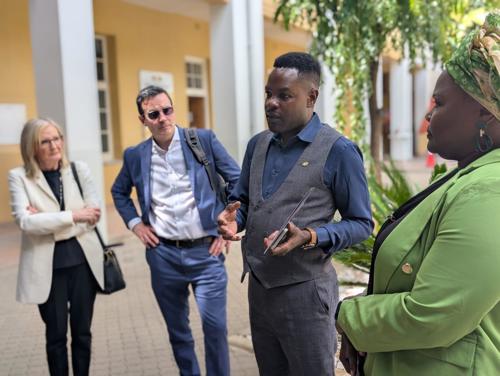
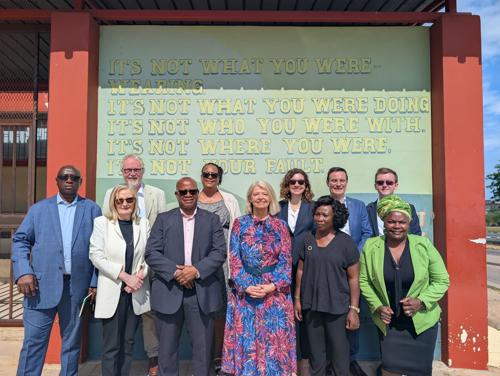
A cross-party CPA UK delegation of 6 UK Members, led by Harriett Baldwin MP, recently visited Windhoek, Namibia for a bilateral programme in partnership with the Parliament of Namibia and the British High Commission. They attended meetings with parliamentarians and officials from both the National Assembly and the National Council, as well as engaging with a diverse range of external stakeholders.
This visit took place at a crucial point in Namibia’s parliamentary calendar, coinciding with the State Opening of Parliament and the induction of newly elected Members of the National Council. The UK Delegation were honoured to attend the State Opening and witness speeches by President Netumbo Nandi-Ndaitwah, the first female President of Namibia, and Dr. Saara Kuugongelwa-Amadhila, the first female Speaker of Parliament.
Last year's appointments marked a pivotal moment for women’s political representation in Namibia, and indeed the world, as Namibia became the first African nation to have women occupy the top three leadership positions of President, Vice-President (Lucy Witbooi) and Speaker. In the National Assembly, women currently make up 42% of Members, in part due to the landmark “zebra lists” employed by the ruling party SWAPO. Women’s political representation was thus a major focus of this visit.
This visit identified and developed key shared thematic priorities, including women’s political representation, just energy transition, and health policy, looking particularly at initiatives focused on reducing gender-based violence and increasing the safety of women and girls.
Programme
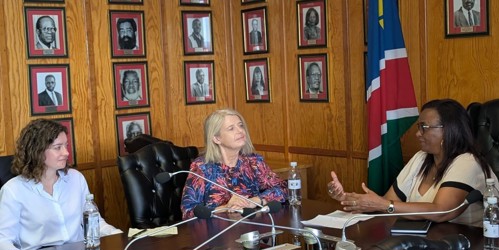
The delegation met with Members from both Houses during the visit. Engagement with the National Assembly included a meeting with the Committee Chairperson for Gender and Deputy Chairpersons for the Committees on Education and Natural Resources. The empowerment of women and young people was recognised as a key shared priority.
The delegation was welcomed to the upper house by the Chairperson of the National Council, Lukas Muha. Hon. Muha discussed the importance of shared peace-building and emphasised the integral involvement of the CPA “family” in this process.
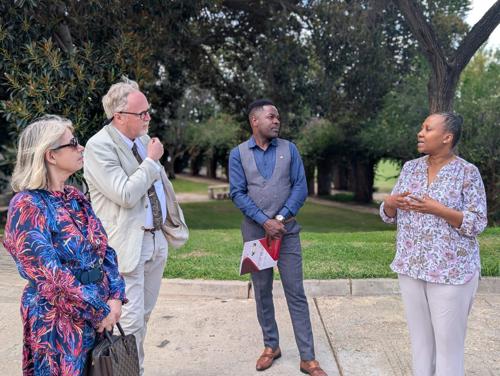
The programme also featured ministerial engagements, including a meeting with Dr Esperance Luvindao, the Minister of Health and Social Care and the youngest health minister in Africa. Here the delegation identified shared challenges of vaccine outreach, gender-based violence and digital health. The delegation also met with Indileni Daniel, the Minister of Environment and Tourism and officials from the Ministry of Mines, Energy and Industry. This meeting gave insight into Namibia’s rich landscape and its unique potential as both an environmental and industrial force. Namibia’s potential for green transition was further explored through a visit to a newly active solar plant on the last day of the visit.
In addition to the parliamentary programme, the delegation learned about efforts to address Gender-Based Violence in Namibia . This included a visit to the national Gender-Based Violence Unit and a visit to a local school. At the school, the delegation witnessed a performance by the Ombetja Yehinga Organisation (OYO), an organisation using art to educate young people on societal issues such as gender-based violence and HIV/AIDS. The delegation was able to observe the impact of this performance first-hand and understand the key issues affecting young people in the area. These visits provided an integral opportunity to understand the issues affecting communities in Windhoek and the civil society infrastructure in place to address this.
National Council Women Members Meeting
The meeting with National Council Women Members was led by Deputy Chairperson Emma Muteka, the youngest Presiding Officer and only woman re-elected to the Council. She noted the contrast between women’s representation in the National Assembly and in the National Council, as only 7 out of the 42 newly elected Council members were women, although it was noted that this was an improvement on the 6 women elected in 2020. The challenges of cultural barriers and financial constraints were recognised by Council Members, including the common reproach of “how can she run parliament if she can’t run a house?”.
The members agreed that it was important to speak up for women’s political struggles but also to ensure that politics was made attractive for young women. The delegation shared initiatives present in the UK Parliament, such as the Ask Her to Stand campaign. The role of men in this process was championed by all, but Council Members also recognised the centrality of women’s support, as it was agreed that this was often overlooked.
Next steps
This was a dynamic programme with strong parliamentary engagement and a diverse range of external stakeholder visits. The delegation built on relationships with the Parliament and will look to sustain these through programmes such as the 69th Commonwealth Parliamentary Conference, held in Cape Town in September.
Meetings with the Parliament and other stakeholders produced key areas for follow-up, including building on stakeholder engagement. Shared learning on gender-based violence initiatives, training for women parliamentarians and community programmes were all acknowledged as grounds for future discussions and collaboration.